SmartStamp
SmartStamp links a physical stamp to a digital record, so anything it marks can be verified later.
We explored two uses: official document validation for institutions, and proof of authenticity and provenance for artworks.
The client’s public website, smartstamp.com. Visit website (opens in a new tab)
- Project Type
- Product StrategyUX & UI DesignSystem ArchitectureDashboard DesignGraphic Design
- Skills
- User ResearchInformation ArchitectureInteraction DesignSecurity-Oriented UXPrototypingCompliance-Focused Design
- Client
- SmartStamp AG
- My Role
- UI & UX DesignProduct StrategySystem ArchitecturePrototypingGraphic Design
Short read
My Role
For SmartStamp, I led the UX and product development of a secure, technology-enabled stamping system that bridges physical validation with digital verification. I designed the interaction architecture for the admin dashboard, structured authentication workflows, and developed a scalable interface system for monitoring and compliance.
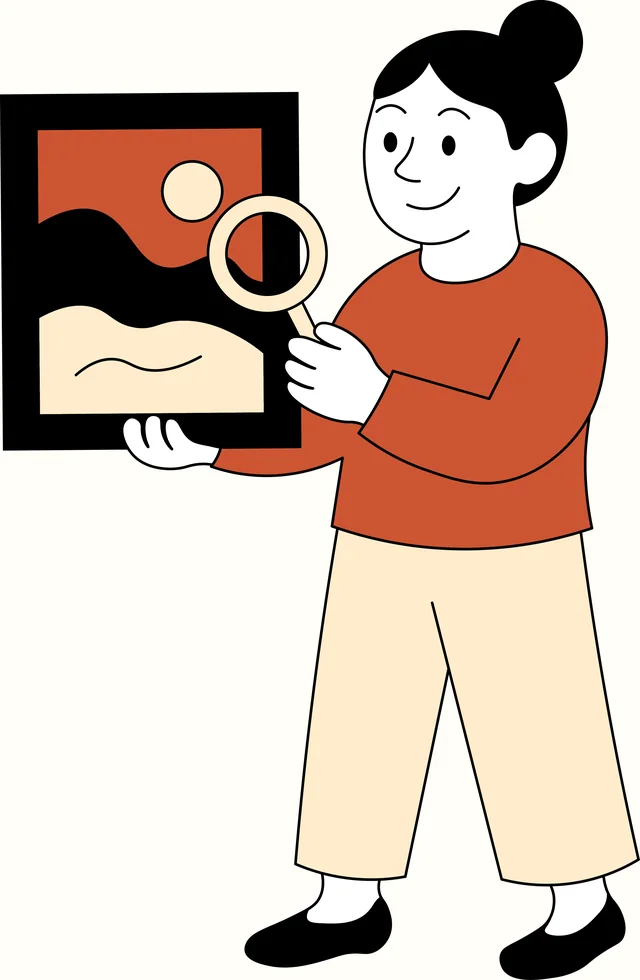
I did the UX and UI, and the graphic design, which includes the illustrations. I did not do the brand design. There was a brand designer, and we chose the brand together: I gave my opinion and feedback. I worked on the product and the brand with the brand designer.
Target audience
SmartStamp is designed for institutions and organizations that rely on official document validation processes. Primary users include government offices, legal and notary services, financial institutions, and corporate compliance teams.
Main Challenge
The core challenge was transforming a traditionally analog approval process into a secure, traceable digital ecosystem without overcomplicating the user experience.
The system needed to integrate physical stamps with digital identity, real-time logging, and verification workflows, all while remaining simple for daily operational use. Balancing security requirements, compliance standards, and usability was essential.
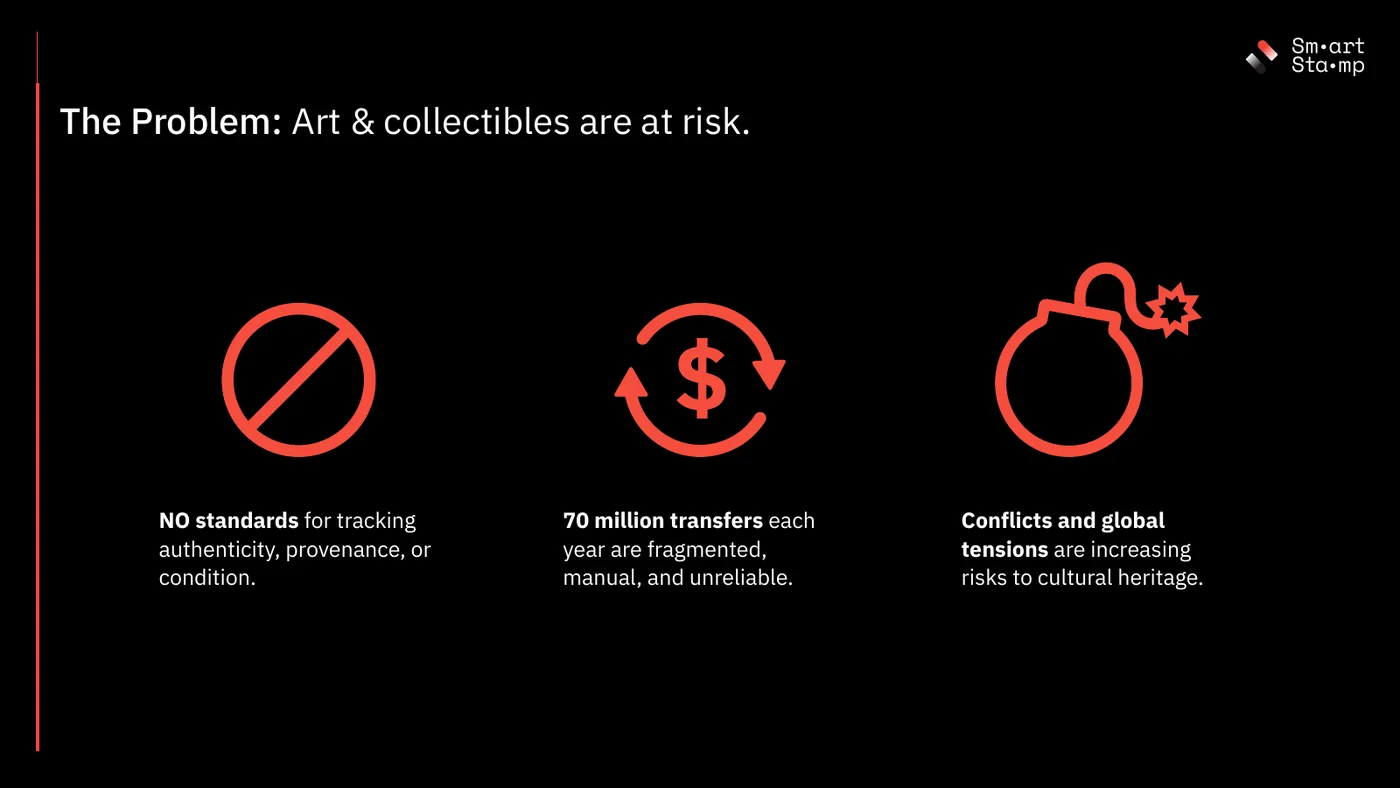
The art market still relies heavily on physical certificates, manual signatures, and fragmented digital records. Fraud, forgery, and unclear provenance remain significant risks, especially in secondary sales and private transactions.
Any digital system must reinforce, not replace, traditional validation rituals.
Our Solution
SmartStamp introduces a secure hybrid system that connects physical stamps with a centralized digital verification platform. Each stamp is assigned a unique digital identity and linked to real-time tracking, authentication logs, and cloud-based records.
Through QR or NFC integration, documents can be instantly verified, while administrators monitor usage through a structured dashboard. By combining physical validation with digital traceability, SmartStamp increases document security, reduces forgery risks, and enables transparent, audit-ready workflows.

Digital artwork passport
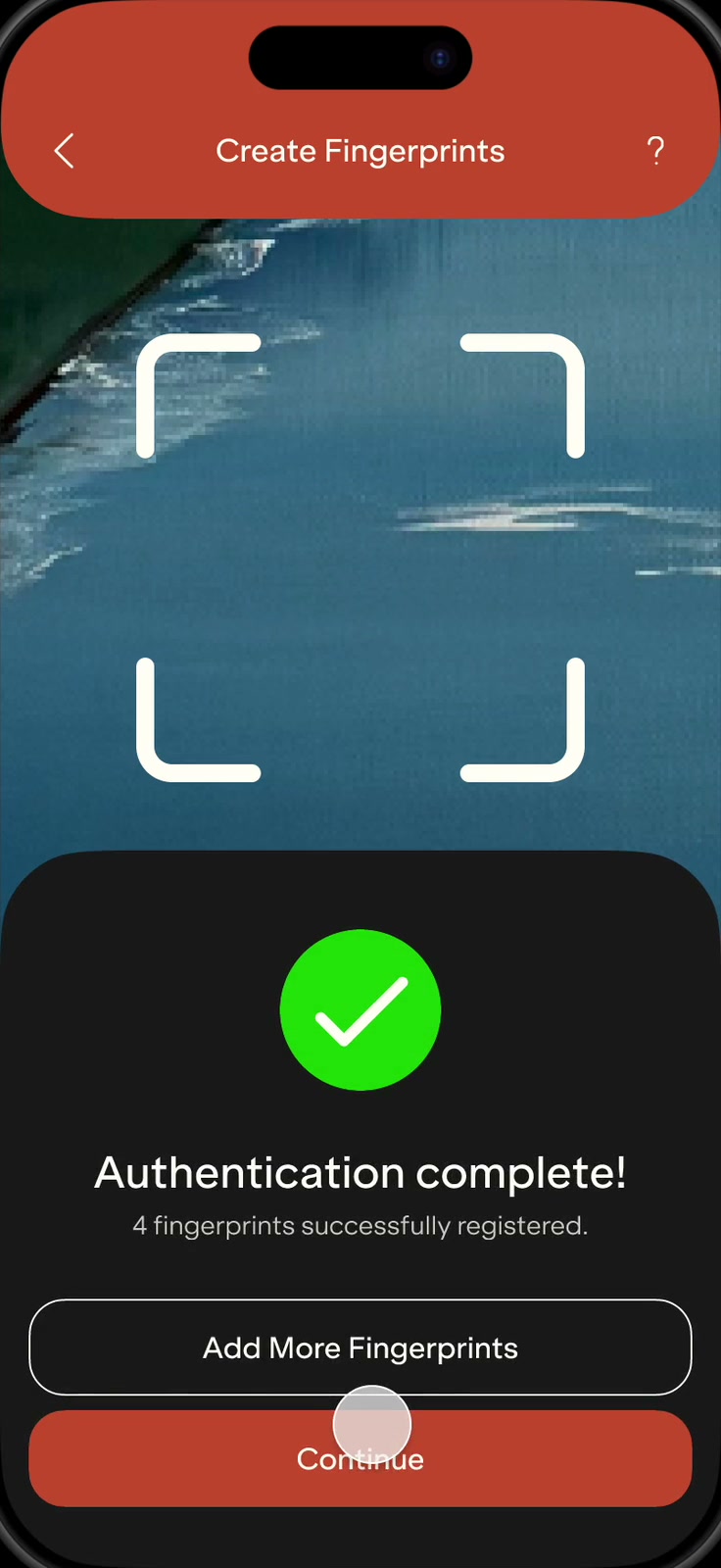
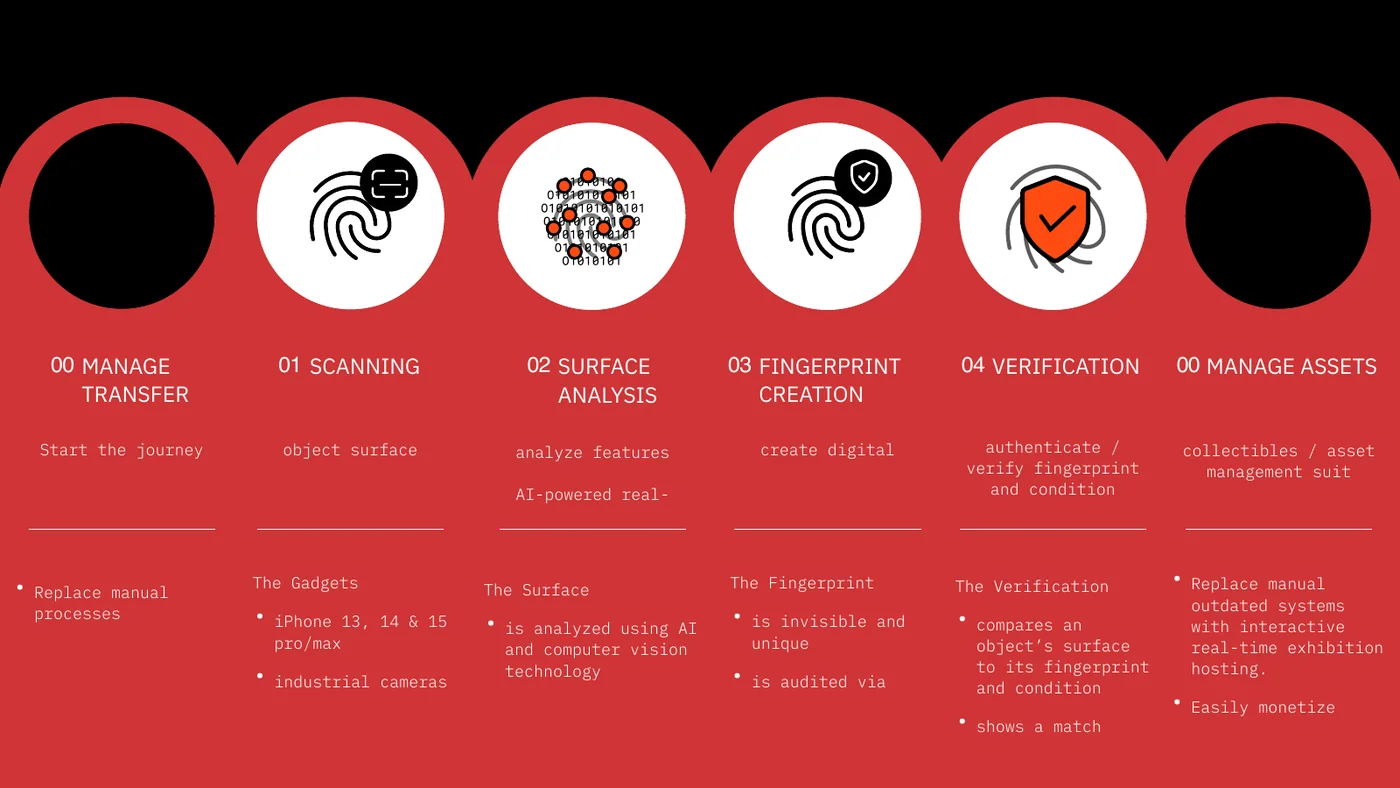
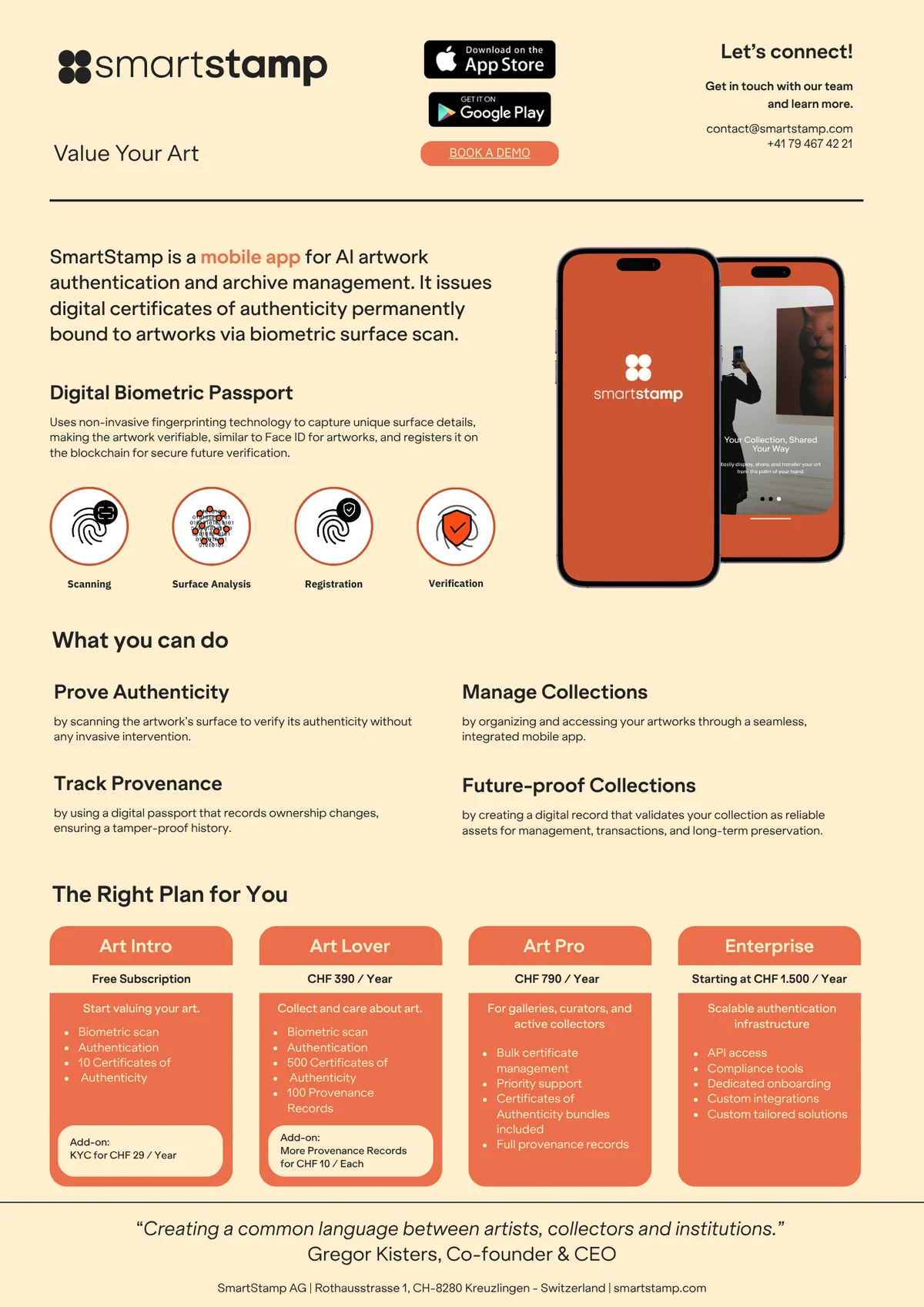
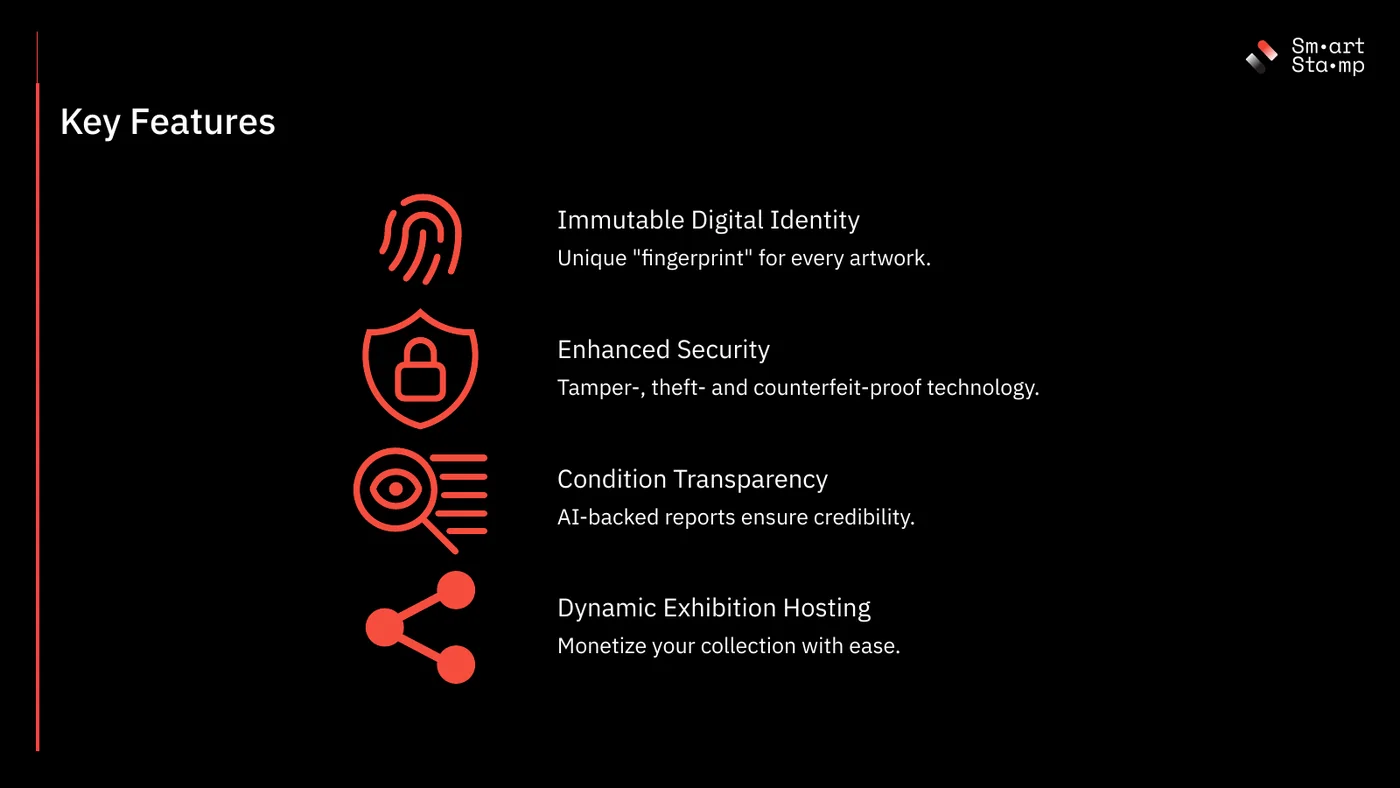
SmartStamp is a mobile app for authenticating artworks and managing archives. It issues digital certificates of authenticity permanently bound to artworks via biometric surface scan.
Uses non-invasive fingerprinting technology to capture unique surface details, making the artwork verifiable, similar to Face ID for artworks, and registers it on the blockchain for secure future verification.


What you can do
Prove Authenticity
by scanning the artwork’s surface to verify its authenticity without any invasive intervention.
Track Provenance
by using a digital passport that records ownership changes, ensuring a tamper-proof history.
Manage Collections
by organizing and accessing your artworks through a seamless, integrated mobile app.
Future-proof Collections
by creating a digital record that validates your collection as reliable assets for management, transactions, and long-term preservation.
Authenticate, archive and nurture your art collection.
The full process


SmartStamp links a physical stamp to a digital record, so anything it marks can be verified later. We explored two uses: official document validation for institutions, and proof of authenticity and provenance for artworks. SmartStamp is a secure, technology-enabled stamping system designed to modernize traditional document validation processes. By integrating physical stamps with digital authentication, tracking, and cloud-based verification, the platform transforms static approval workflows into traceable, auditable systems. SmartStamp strengthens security, increases transparency, and reduces fraud by linking every physical stamp action to a verified digital record in real time.
- Project Type
- Product StrategyUX & UI DesignSystem ArchitectureDashboard Design
- Skills
- User ResearchInformation ArchitectureInteraction DesignSecurity-Oriented UXPrototypingCompliance-Focused Design
- Client
- SmartStamp AG
My Role
- UI & UX Design
- Product Strategy
- System Architecture
- Prototyping
For SmartStamp, I led the UX and product development of a secure, technology-enabled stamping system that bridges physical validation with digital verification. I designed the interaction architecture for the admin dashboard, structured authentication workflows, and developed a scalable interface system for monitoring and compliance.
My focus was creating a secure, intuitive experience that simplifies complex tracking processes while maintaining clarity, reliability, and trust across institutional environments.
Main Challenge
The core challenge was transforming a traditionally analog approval process into a secure, traceable digital ecosystem without overcomplicating the user experience.
The system needed to integrate physical stamps with digital identity, real-time logging, and verification workflows, all while remaining simple for daily operational use. Balancing security requirements, compliance standards, and usability was essential. The interface had to communicate trust, control, and transparency while supporting administrators in monitoring stamp usage across multiple users and locations.
Target audience
SmartStamp is designed for institutions and organizations that rely on official document validation processes. Primary users include government offices, legal and notary services, financial institutions, and corporate compliance teams.
Secondary stakeholders include administrators and auditors responsible for oversight, traceability, and regulatory adherence. The platform supports organizations seeking stronger fraud prevention, operational accountability, and digital transformation of approval workflows.
Our Solution
SmartStamp introduces a secure hybrid system that connects physical stamps with a centralized digital verification platform. Each stamp is assigned a unique digital identity and linked to real-time tracking, authentication logs, and cloud-based records.
Through QR or NFC integration, documents can be instantly verified, while administrators monitor usage through a structured dashboard. By combining physical validation with digital traceability, SmartStamp increases document security, reduces forgery risks, and enables transparent, audit-ready workflows.
Our research for SmartStamp focused on understanding how authenticity, provenance, and trust are managed within contemporary art transactions. We explored how physical validation methods intersect with digital documentation, and how artists, galleries, collectors, and sellers experience friction in verifying originality and ownership.
The goal was to design a system that strengthens trust without disrupting existing creative and commercial workflows.
Market and Ecosystem Analysis
We analyzed the contemporary art ecosystem, identifying key pain points in authentication, resale verification, and documentation management.
The art market still relies heavily on physical certificates, manual signatures, and fragmented digital records. Fraud, forgery, and unclear provenance remain significant risks, especially in secondary sales and private transactions.
This analysis revealed an opportunity: a hybrid system that combines physical stamping with secure digital tracking could enhance credibility while preserving traditional validation practices.
Client's Needs
Through conversations with the founders and interviews with artists, galleries, and collectors, we identified core priorities within the art authentication ecosystem:
- Trust & Authenticity Assurance: Create a system that strengthens credibility without replacing traditional validation rituals.
- Seamless Workflow Integration: Integrate digital tracking into existing art sales and certification processes without adding complexity.
- Institutional-Grade Security: Provide a tamper-resistant, traceable authentication framework suitable for high-value transactions.
Key Findings
- Hybrid Validation Preference: The art market values physical proof (stamps, certificates, signatures), but welcomes digital reinforcement when it enhances trust without disrupting tradition.
- Friction in Secondary Sales: Verification becomes most critical during resale and private transactions, where provenance is often unclear or fragmented.
- Clarity Over Complexity: Users across all groups avoid overly technical systems. The interface must feel discreet, intuitive, and trustworthy rather than “tech-heavy.”
Understanding User Needs
- Trust is Central: The art market operates on reputation and credibility. Any digital system must reinforce, not replace, traditional validation rituals.
- Simplicity Over Complexity: Users avoid overly technical systems. The solution must feel intuitive and discreet.
- Hybrid Preference: Physical validation (stamps, signatures) remains culturally important, but users welcome digital reinforcement if seamlessly integrated.
- Transparency in Secondary Markets: Verification becomes most critical during resale, cross-border sales, and private transactions.


- Information Architecture
- User Flow
- Visual Identity


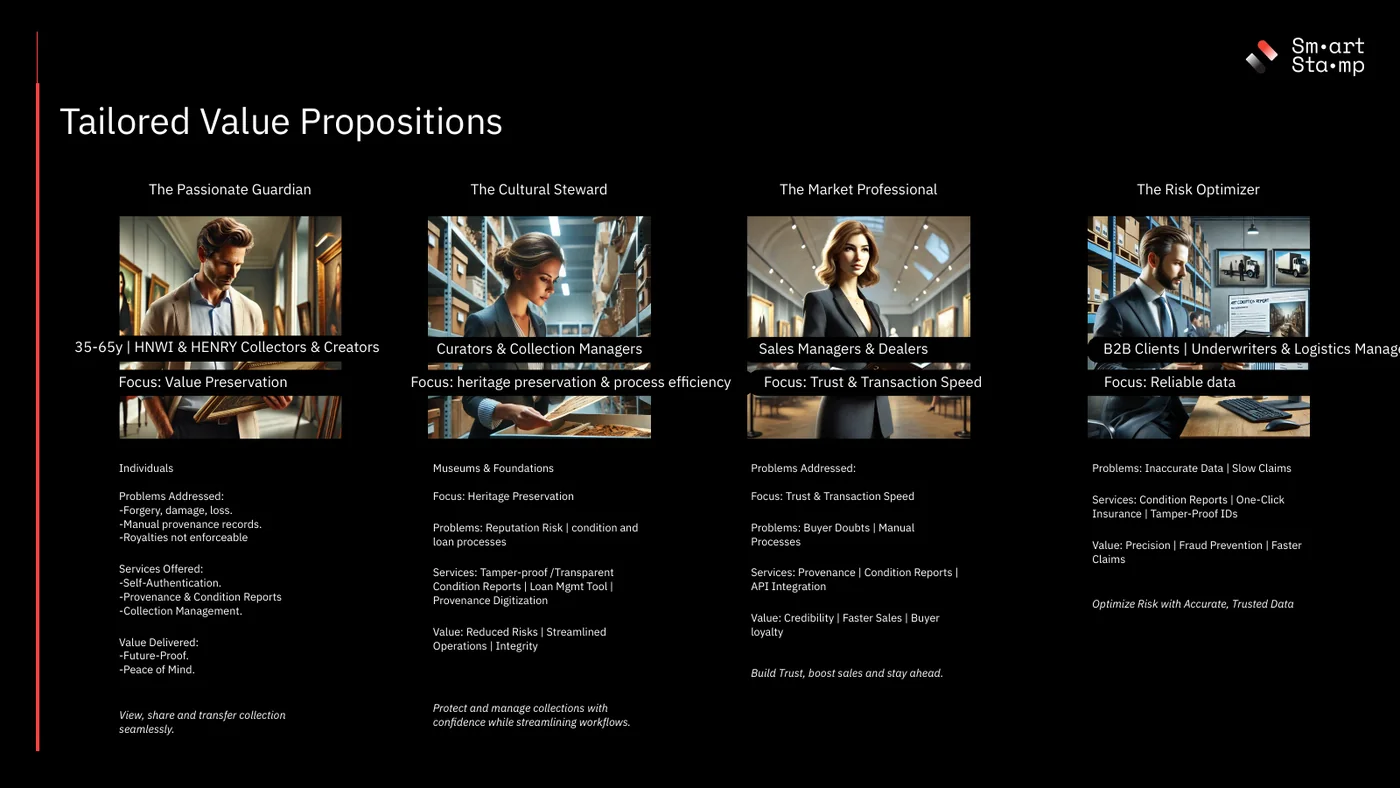
Defining User Profiles
Persona
From interviews and contextual research, we defined representative personas across the art ecosystem.
Styleguide and UI Components
Illustrations








One Pager
Investor Kit 2025
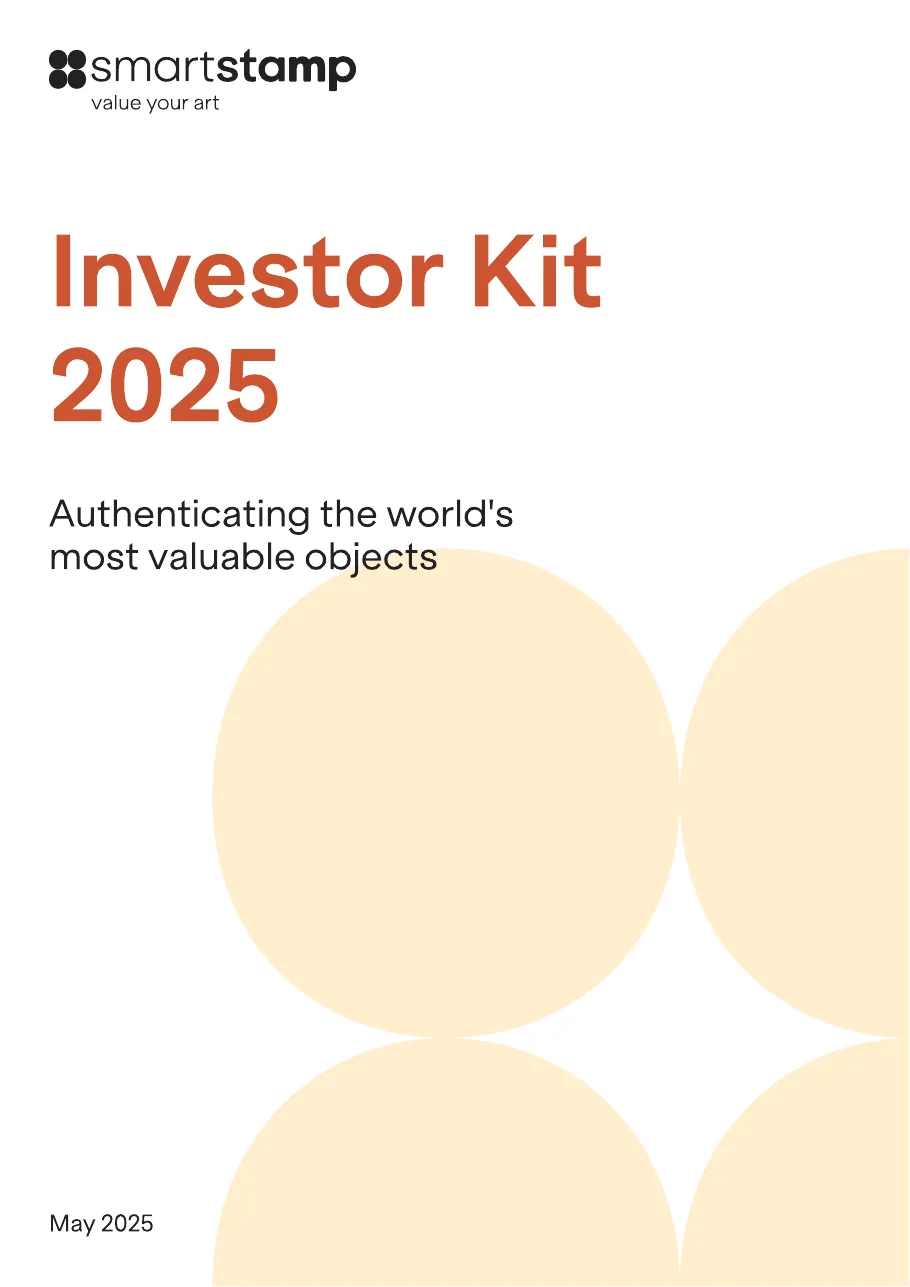
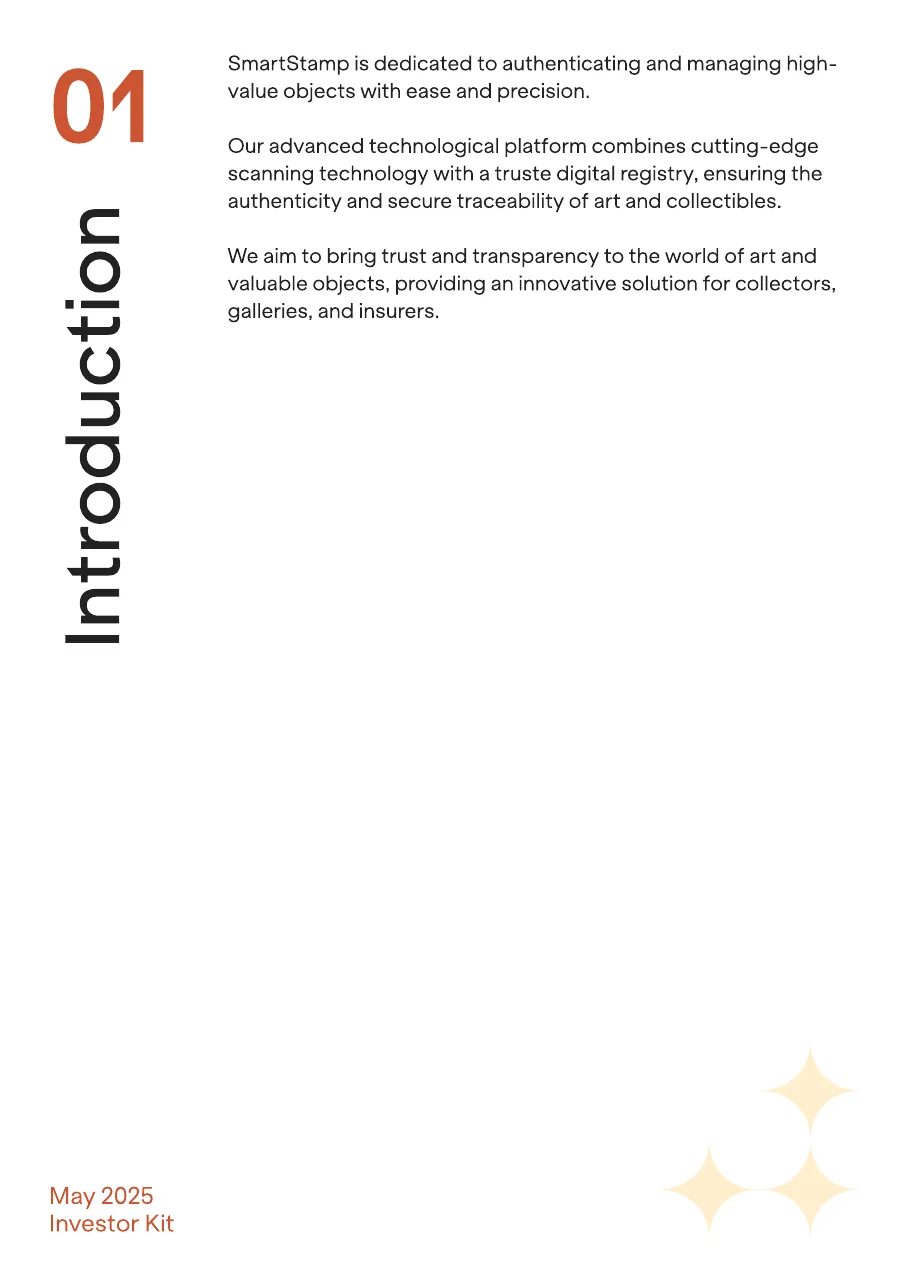
Artwork Certificate
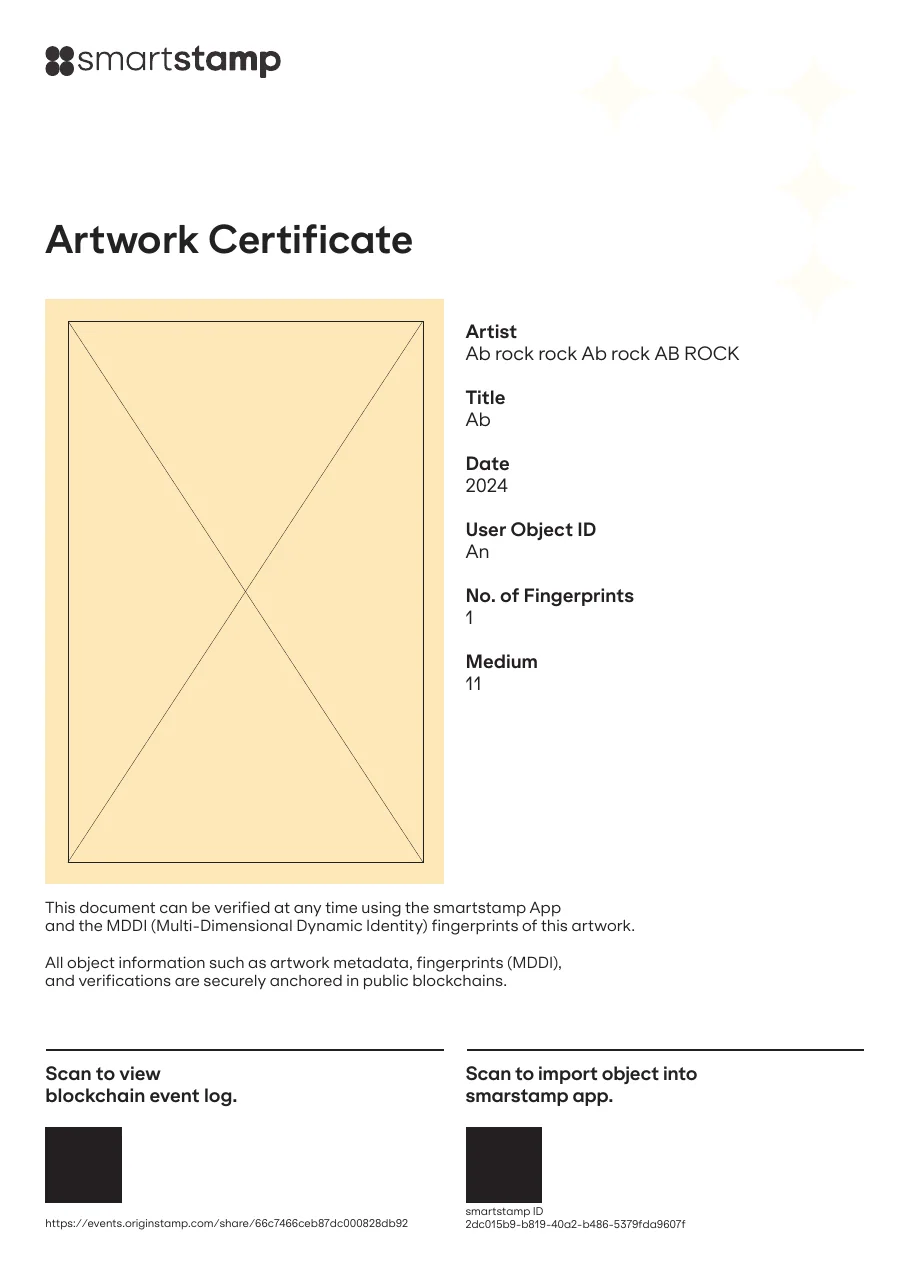
Flyer

Video Background


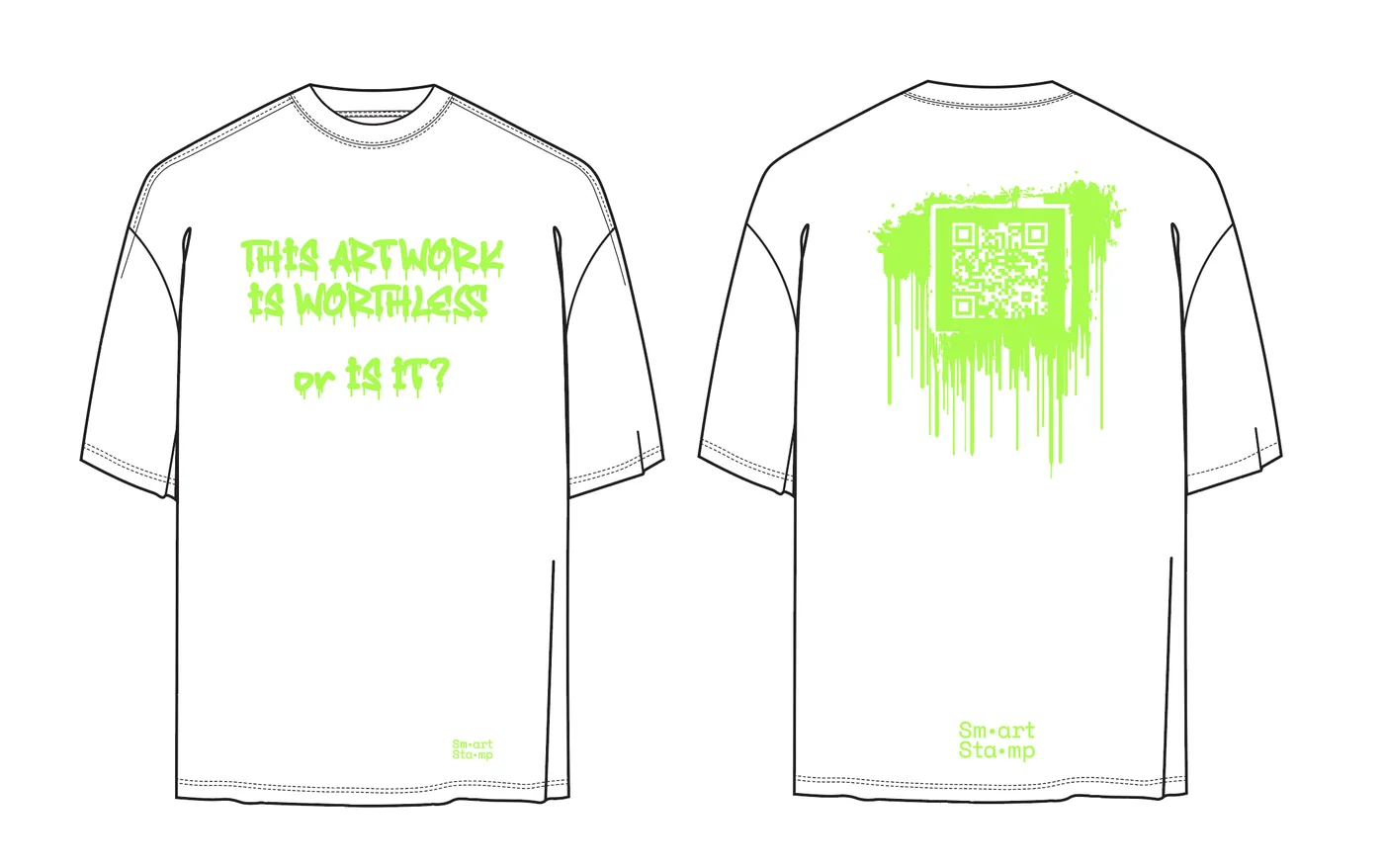
T-shirt